In-depth look at each project's impact, technology, and outcomes
BraVRy
BraVRy is an innovative virtual reality platform that provides VR exposure therapy to individuals with common phobias and anxiety triggers, helping them overcome their fears through immersive simulations complete with biotracking and a website dashboard. The platform combines biotracking capabilities that measure physiological stress indicators, graded exposure therapy that adjusts the VR environment based on patient comfort, and patient autonomy through self-directed engagement with customizable environments.
Achievements: Following their second-place overall finish at NatHacks, Canada's largest hackathon, the BraVRy team secured $15,000 in total funding, with the largest contribution being a $10,000 award from the University of Calgary's Cumming School of Medicine Helios Scholarship. The team has also been recognized as finalists in the Ontario Brain Institute Neurotech Pitch Competition at Inventures and participated in the Hunter Hub's Launchpad Live program.
Technology: BraVRy utilizes a comprehensive tech stack that bridges immersive virtual reality with modern web and cloud technologies. The VR simulation is developed in Unity using C#, with integration of the Meta XR SDK to support Meta Quest 2 and 3 headsets for delivering interactive exposure therapy. The companion web dashboard is built using React.js and styled with Tailwind CSS, offering a responsive interface for tracking and managing session data. Firebase is used as the backend to handle real-time data storage, authentication, and syncing between the VR application and the web platform.
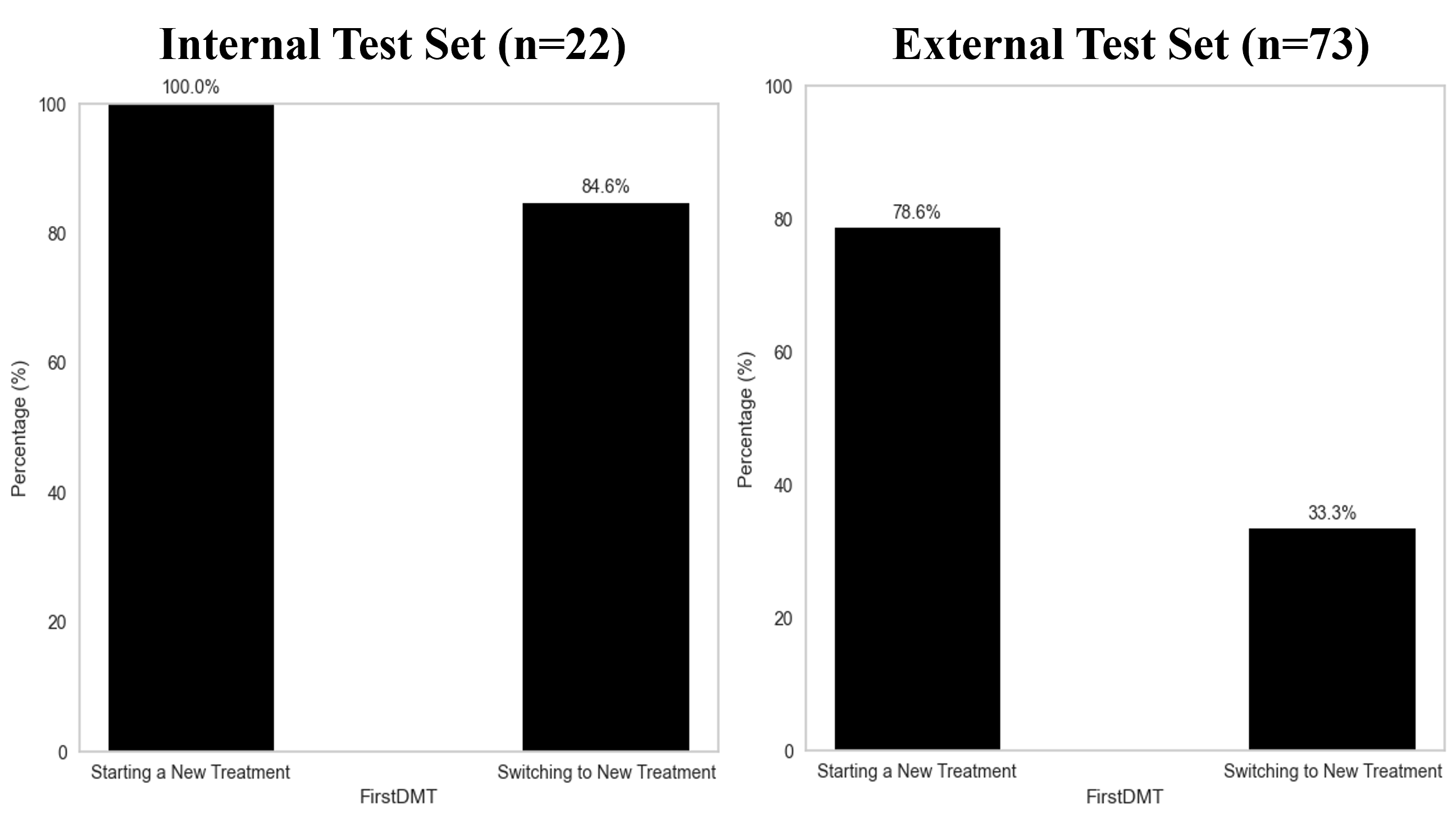
This project served as my master's thesis at the University of Calgary in the biomedical engineering program, investigating the application of deep learning models for predicting treatment response in relapsing-remitting multiple sclerosis (RRMS) patients. The research focused on developing innovative approaches to personalize disease-modifying therapy selection by leveraging standard clinical brain MRI data and clinical variables to predict 2-year treatment outcomes.
Impact: Through the implementation of ResNet50-based convolutional neural networks and a novel weakly supervised learning framework, this study demonstrated the feasibility of using routine clinical imaging data to achieve meaningful prediction accuracies for treatment response assessment. The significance and potential impact of this work was recognized through the successful acquisition of over $30,000 in external funding from the Alberta Graduate Excellence Scholarship and Mitacs.
Technology: This project utilized both Python and R, along with established neuroimaging tools, to build predictive models for multiple sclerosis. Image preprocessing was performed using FSL (FMRIB Software Library), with bash scripting employed to automate processing workflows. Subsequent data handling, model training, and analysis were conducted in Python using scikit-learn, NumPy, pandas, TensorFlow, and nibabel for working with medical imaging data. For statistical comparison of model performance, DeLong's test for AUC was carried out using the pROC package in R.
Causal Inference for Investigating Childhood Factors of Depression
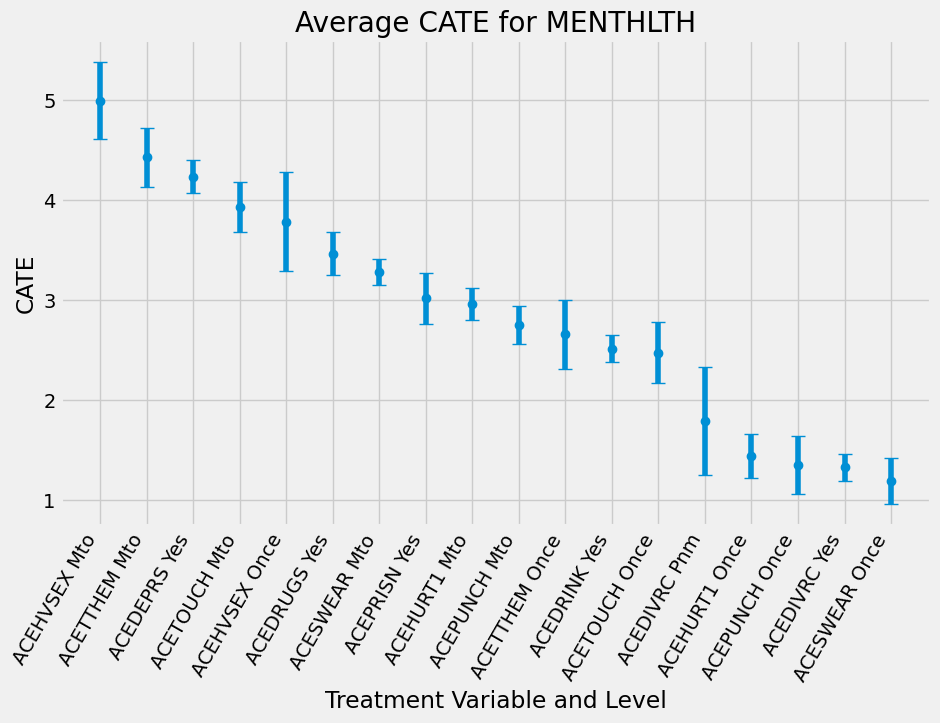
This project leverages advanced causal machine learning techniques to quantify the impact of adverse childhood experiences (ACEs) on mental health outcomes using the 2022 Behavioral Risk Factor Surveillance System (BRFSS) dataset. Unlike traditional predictive models, our approach focuses on estimating cause-and-effect relationships, revealing how specific ACEs—such as parental depression and childhood sexual abuse—increase the risk of depressive disorders and the number of poor mental health days.
Impact: By incorporating demographic controls and utilizing models like DRLearner and uplift random forests, we identify populations most vulnerable to these early life traumas. The novel findings from this study were presented at the Inter University Big Data Challenge 2024 conference hosted by Stem Fellowship, highlighting the potential of causal machine learning to inform targeted mental health interventions.
Technology: This project utilized a Python-based tech stack centered around causal inference and data analysis. Key libraries included CausalML for implementing advanced causal machine learning algorithms, scikit-learn for traditional machine learning tasks and model evaluation, pandas for efficient data manipulation and preprocessing, and matplotlib for creating detailed visualizations of results.
SwipeTalk is an innovative mobile application designed to facilitate seamless and engaging conversations by allowing users to connect through swipe-based interactions. The app focuses on making social communication more dynamic and intuitive, enabling users to discover and chat with new people effortlessly. By combining a user-friendly interface with interactive features, SwipeTalk aims to enhance social networking experiences and help individuals build meaningful connections in a fast-paced digital world.
Achievement: Notably, SwipeTalk was presented at the IEEE Special Interest Group on Humanitarian Technology (IEEE-SIGHT) 2023 hackathon, where it won first place overall.
Technology: SwipeTalk is developed using Unity as the core platform, with C# scripting to implement the app's interactive functionalities. The project is specifically designed for deployment on the Microsoft HoloLens 2, leveraging its mixed reality capabilities to create an immersive communication experience. This focused tech stack allows SwipeTalk to harness spatial computing and gesture-based interactions unique to the HoloLens environment.
Triage2Go is an innovative healthcare solution I developed with my team "Hackers not Slackers" to address the critical challenge of reducing Emergency Department wait times and improving patient flow through strategic redirection to primary care facilities. Our system tackles the inefficiencies in current emergency department structures by identifying patients assigned CTAS 4 and CTAS 5 scores who could be effectively treated in primary care settings rather than emergency departments.
Achievement: This project earned recognition as the 3rd place overall winner at HackMedTech 2023, organized by the MedTech Talent Accelerator, demonstrating its potential to transform emergency healthcare delivery through innovative patient flow management and virtual care integration.
Technology: Triage2Go was built using a lightweight and accessible tech stack composed of HTML and CSS for structuring and styling the web interface, with additional integration of the Zoom Web SDK to enable video call functionality directly within the browser. This minimalist yet effective setup allowed the team to create a fully functional, browser-based triage tool without relying on complex frontend frameworks or backend infrastructure.
Greenwash Radar
Greenwash Radar is a comprehensive sustainability tracking tool designed to help organizations and individuals identify and mitigate greenwashing practices in their marketing and communications. The tool provides real-time monitoring of environmental claims, enabling users to verify the authenticity of sustainability initiatives and make informed decisions about their investments or partnerships.
Achievement:This project won the KPMG Sustainability Challenge at Hack the Bias 2026, recognizing its innovative approach to combating greenwashing in corporate communications.
Technology: Built a framework-free web platform where a vanilla HTML5/CSS3/ES6 frontend using Mapbox GL JS and Mermaid.js interfaces with a modular Flask-based, multi-agent AI backend using OpenAI’s Responses API to extract claims, retrieve evidence via web search, and issue greenwashing verdicts across 150+ companies stored in GeoJSON, with a provider-agnostic architecture that allows AI models to be swapped without frontend changes.
Get In Touch
Interested in collaborating or learning more about my work? I'd love to hear from you.